
Showing posts with label Slovenia. Show all posts
Showing posts with label Slovenia. Show all posts
Monday, February 17, 2014

Saturday, February 15, 2014
When Narnia Returns
 |
| A frozen Hortensia blossom in our garden ... |
 |
| The view is quite romantic ... |
 |
| ... but all in all it's a disaster. |
Sunday, January 5, 2014

Friday, January 3, 2014

Sunday, November 10, 2013


Tuesday, November 5, 2013


Friday, November 1, 2013

Thursday, August 22, 2013


Thursday, July 4, 2013


Wednesday, July 3, 2013


Saturday, June 23, 2012
Bright Daugther of the Mountains
River Isonzo rises in the heart of Julian Alps and holds, due to her natural beauty and historical significance, a special place in the hearts of many Slovenians. The poet Simon Gregorčič dedicated one of his most beautiful poems to the 'Emerald Beauty'.

River Soča

River Soča

River of Tolmin
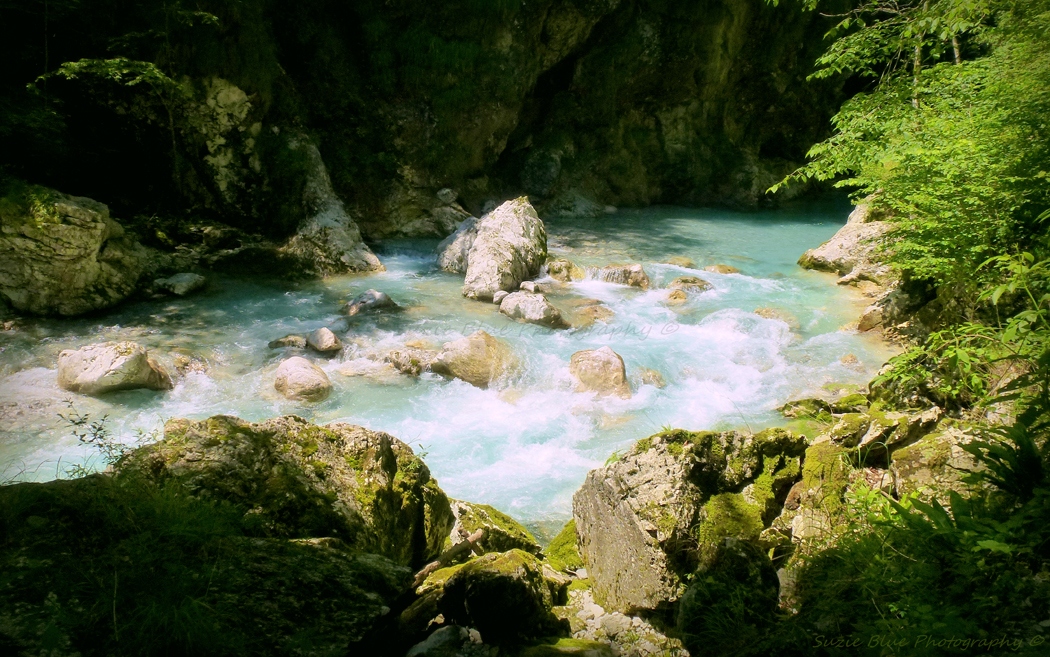
River of Tolmin
I couldn't find an English translation of the poem 'To Soča' (I believe we're still waiting for it), but for those of you who speak Spanish, there is a Spanish version at the end of the post.
SOČI
Krasná si, bistra hči planin,
brdka v prirodni si lepoti,
ko ti prozornih globočin
nevihte temne srd ne moti,
krasná si, hči planin!
Tvoj tek je živ in je legak,
ko hod deklet s planine;
in jasna si ko gorski zrak,
in glasna si, kot spev krepak
planinske je mladine –
krasna si, hči planin.
Rad gledam ti v valove bodre,
valove te zeleno-modre;
temna zelen planinskih trav
in vedra višnjevost višav
lepo se v njih je zlila;
na rosah sinjega neba,
na rosah zelenih gora
lepoto to si pila –
krasna si, hči planin!
Ti meni si predraga znanka!
Ko z gorskih prišumiš dobrav,
od doma se mi zdiš poslanka,
nesoča mnog mi ljub pozdrav –
Bog sprimi te tu sred planjav!…
Kako glasno ljubo šumljaš,
kako čvrsto, krepko skakljaš,
ko sred gora še pot imaš!
A ko prideš na ravnine,
zakaj te živa radost mine?
Kaj trudno lezeš in počasi,
zakaj so tožni tvoji glasi?
Težko se ločiš od hribov,
zibelke tvojega valovja?
Mar veš, da tečeš tik grobov,
grobov slovenskega domovja?
Obojno bol pač tu trpiš!
V tej boli tožna in počasna,
ogromna solza se mi zdiš,
a še kot solza – krasna!
Krasna si, bistra hči planin,
brdka v prirodni si lepoti,
ko ti prozornih globočin
nevihte divje srd ne moti!
Pa oh, sirota tebi žuga
vihar grozan, vihar strašan;
prihrumel iz gorkega bo juga,
divjal čez plodno bo ravan,
ki tvoja jo napaja struga-
gorje, da daleč ni ta dan!
Nad tabo jasen bo oblok,
krog tebe pa svinčena toča
in dež krvav in solz potok
in blisk in grom – oh, bitva vroča!
Tod sekla bridka bodo jekla,
in ti mi boš krvava tekla:
kri naša te pojila bo,
sovražna te kalila bo!
Takrat se spomni, bistra Soča,
kar gorko ti srce naroča:
Kar bode shranjenih voda
v oblakih tvojega neba,
kar vode v tvojih bo planinah,
kar bode v cvetnih je ravninah,
tačas pridrvi vse na dan,
narasti, vzkipi v tok strašan!
Ne stiskaj v meje se bregov,
srdita čez branove stopi,
ter tujce, zemlje lačne, utopi
na dno razpenjenih valov!
(Simon Gregorčič)
AL RÍO SOCHA
Hermosa eres, hija clara de las montañas,
en tu belleza natural eres encantadora,
al no turbarte con su ira, de honduras
trasparentes, la tempestad oscura,
hermosa eres, hija de las montañas!
Tu fluir es liviano y vivaz,
como el paso de doncellas de los montes,
y eres límpida como el aire serrano,
y eres sonora como el vigoroso canto
de la juventud montana!
¡Hermosa eres, hija de las montañas!
Me gusta mirar tus excitantes olas,
a tus olas esmeraldinas:
El verde oscuro de hierbas serranas
y el morado sereno de las alturas
en ellas bellamente confluyeron;
Sobre el rocío del celeste cielo,
sobre el rocío de quebradas verdes
tú has bebido esta hermosura —
hermosa eres, hija de las montañas!
Tú eres mi muy querida conocida!
Al bajar de los prados montañosos,
de mi hogar pareces mensajera,
trayéndome saludos cariñosos —
Dios te reciba en medio de este llano!...
Con qué fuerza murmuras dulcemente,
con qué soltura saltas tan segura,
cuando corres aun entre las montañas.
Mas, al llegar tus rápidos a las llanuras
¿por qué de pronto se te van las ganas?
¿por qué te arrastras lenta y cansada?
¿Por qué tus voces se vuelven tristes?
¿Separarte es difícil de tus montañas,
de la cuna de tus oleajes?
¿Acaso sabes que bordeas los sepulcros,
sepulcros de hogares eslovenos?
¡El dolor de ambas penas aquí sufres!
En tu pena lenta y tan triste
una lágrima enorme me pareces,
y aún como lágrima — hermosa!
¡Hermosa eres, hija clara de las montañas!
En tu belleza natural eres encantadora,
al no turbarte con su ira, de honduras
trasparentes, la tempestad oscura!
Mas, oh, pobre, a ti te amenaza
un temporal de horror, temporal terrible;
irrumpirá desde el sur caliente,
correrá salvaje por la llanura fértil
que tu estás bañando con tu cauce —
guay, que no está lejos ese día!
Sobre ti brillará límpido el cielo
mas, alrededor tuyo habrá granizo de plomo,
un aluvión de lágrimas y lluvia de sangre,
relámpagos y truenos, - oh, lucha enardecida!
Por aquí aceros cortarán dolientes
y tu correrás toda ensangrentada:
nuestra sangre será para abrevarte,
y la enemiga para enturbiarte!
Recuerde entonces, clara Socha,
lo que el corazón ardiente te encarga:
Con todas las aguas guardadas
en las nubes de tus cielos,
y que aún habrá en tus montañas
y en florecientes tus llanuras,
¡entonces irrumpe con todas ellas
en terrible correntada embravecida!
Y no te limites a las riberas,
furiosa sobrepasa las defensas
y a los extranjeros, hambrientos de nuestra tierra,
ahoga en el fondo de tus olas encrespadas!
(Translation/traducción: Branko Rebozov)
Monday, February 27, 2012

Monday, January 2, 2012
Have You Ever Been to Maribor?
Have you ever been to Maribor? Don’t worry, you will soon want to. In 2012, Maribor will be the European Capital of Culture.
 In 2012, the Slovenian city of Maribor – which is home to the oldest vine in the world – is proud to play host to a year of outstanding and exciting cultural performances to which all of Europe is invited. This is a challenge for Maribor, but one that faces many other regional towns and cities throughout Slovenia and, indeed throughout Europe at this difficult time for us all. Maribor will share the ECOC 2012 title with its Slovenian partner towns Murska Sobota, Novo Mesto, Ptuj, Slovenj Gradec and Velenje. Altogether, the ECOC will extend to cover more than half of the total area of Slovenia. In 2012, this unique region between Austria, Italy and Hungary which has had a history to rival any part of Europe since Roman times will once again become an international crossroad.
 |
| Stari most, 2011 © Suzie Blue Photography |
 In 2012, the Slovenian city of Maribor – which is home to the oldest vine in the world – is proud to play host to a year of outstanding and exciting cultural performances to which all of Europe is invited. This is a challenge for Maribor, but one that faces many other regional towns and cities throughout Slovenia and, indeed throughout Europe at this difficult time for us all. Maribor will share the ECOC 2012 title with its Slovenian partner towns Murska Sobota, Novo Mesto, Ptuj, Slovenj Gradec and Velenje. Altogether, the ECOC will extend to cover more than half of the total area of Slovenia. In 2012, this unique region between Austria, Italy and Hungary which has had a history to rival any part of Europe since Roman times will once again become an international crossroad.
Maribor is thoroughly preparing for the ECOC. More than 400 architecture organisations from all over the world participated in the International Architectural Competition “River Drava 2012”, which combined three central projects for the revitalising regeneration of the river embankment in the city. This area around the river will be one of the principal settings of the European Capital of Culture and a key element to the town’s development in the next 20 years. As a result of the competition, the new art gallery will be designed by a Hungarian firm, the river bank between the Water Tower and the Judgement Tower by one from Italy and the new footbridge across the river Drava by Spanish architects. Europe truly is coming to the heart of Maribor!
With the generous support of the European Regional Development Fund, Maribor has already renovated a historic 13th century building in the city centre which will play host to the headquarters of the European Capital of Culture. Also new is the Maribor Puppet Theatre – located in a former Minorite monastery the theatre is arguably the most beautiful of its type in Europe. Shortly the former monastery’s church will be transformed into a music venue and by 2012, all the city centre’s main squares will have been redeveloped to accommodate and welcome our visitors. The smallest of these, Rotovž Square, will become the new central library. Through realising the vision of world-renowned theatre director Tomaž Pandur, whose artistic endeavours span from Madrid and Berlin to his hometown of Maribor, the city will gain a new Centre of Performing Arts Maribor (CPAM) on the right bank of the Drava River. Offering excellent views across Maribor, CPAM will undoubtedly provide many cultural highlights and become a key visitor attraction during our European Capital of Culture year.
All of this makes the ECOC the biggest cultural project in the history of Slovenia – a country which, coincidentally but perhaps appropriately, will celebrate its 21st birthday as an independent nation in 2012 does so with the opportunity to come of age on the global stage.
The question is not therefore “Have you ever been to Maribor?” but rather “When do you arrive?”.
See you all in 2012….
On the photo:
Today’s Old Bridge or Stari most was built between the years 1906 and 1912. It was one of the most beautiful bridges in the Austro-Hungarian Empire. Prior to the steel construction, there used to be a wooden bridge, that connected the central part with the other side, called Tabor. The bridge was partly destroyed during WWII, rebuilt after the war and renovated in 1990 and 1998. It's 166m long.
(http://mykafkaesquelife.blogspot.com/2010/11/maribor-my-hometown.html)
Tuesday, December 27, 2011
Ptuj at Night
Ptuj is the oldest city in Slovenia. There is evidence that the area was settled in the Stone Age. In the Late Iron Age it was settled by Celts. By the 1st century BC, the settlement was controlled by Ancient Rome. In 69 AD, Vespasian was elected Roman Emperor by the Danubian legions in Ptuj, and the first written mention of the city of Ptuj is from the same year. The city of Poetovio was the base-camp of Legio XIII Gemina in Pannonia. The name originated in the times of Emperor Trajan, who granted the settlement city status and named it Colonia Ulpia Traiana Poetovio in 103.
 |
| Ptuj, 2011 © Suzie Blue Photography |
Read and see more ............
The city had 40,000 inhabitants until it was plundered by the Huns in 450. In 570 the city was occupied by Eurasian Avars and Slavic tribes. Ptuj became part of the Frankish Empire after the fall of Avar state at the end of 8th century. Between 840 and 874 it belonged to the Slavic Balaton Principality of Pribina and Kocelj. Between 874 and 890 Ptuj gradually came under the influence of the Archbishopric of Salzburg; city rights passed in 1376 began an economic upswing for the settlement. As Pettau, it was incorporated into the Duchy of Styria in 1555.
Pettau was a battleground during the Ottoman wars in Europe and suffered from fires in 1684, 1705, 1710, and 1744. Its population and importance began to decline in the 19th century, however, after the completion of the Vienna-Trieste route of the Austrian Southern Railway, as the line went through Marburg (Maribor) instead.
According to the 1910 Austro-Hungarian census, 86% of the population of Pettau's Old Town was German-speaking, while the population of the surrounding villages predominantly spoke Slovene. After the collapse of Austria-Hungary at the end of World War I, Pettau was included in the short-lived Republic of German Austria, but after the military intervention of the Slovenian general Rudolf Maister, the entire territory of Lower Styria was included into the State of Slovenes, Croats and Serbs (Yugoslavia). During the interwar period, the number and the percentage of those identifying as Germans in the city, which was renamed Ptuj, decreased rapidly, although a relatively strong ethnic German minority remained. After the invasion of Yugoslavia in April 1941, Ptuj was occupied by Nazi Germany. From 1941 to 1944 the town's Slovenian population was dispossessed and deported. Their homes were taken over by German speakers from South Tyrol and the Gottschee County, who had themselves been evicted according to an agreement between Adolf Hitler and Benito Mussolini. These German immigrants, along with the native German Pettauer, were expelled to Austria in 1945; many later settled in North America.
Since 1945 Ptuj has been populated almost completely by Slovenians.
(Source: Wikipedia)
 |
| Ptuj, 2011 © Suzie Blue Photography |
 |
 |
 |
Monday, December 5, 2011
The Beauty of Sun and Its Flowers
I see you there in glory shining bright,
Following the sun and its path of light.
Standing tall above all others in the field,
You grow, conquer, and do not yield.
By Katherine R. Lane
 |
Subscribe to:
Posts (Atom)